
How to Choose Curtain Fabric: a Houston Designer's Complete Guide
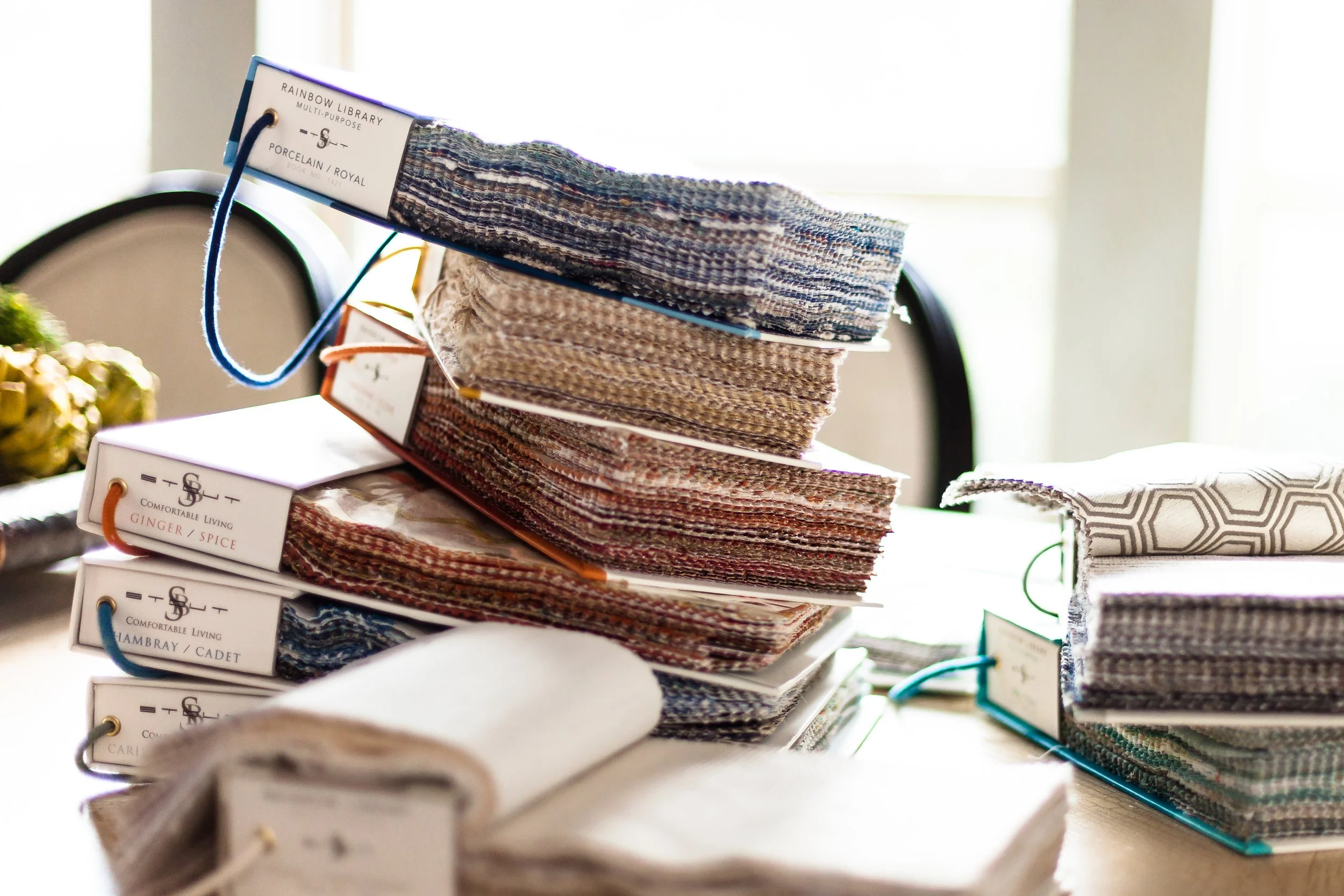
Fabric is the decision most people leave until last. But just because most people do it, doesn’t mean they should. Color, length and hardware can all be adjusted. If you choose a fabric that can't handle your room's light, or that sags in Houston's humidity, there's no fixing it unless you start over. I've had to have that conversation with clients and it's rarely a fun one.
So this guide is structured around the questions you should answer before you look at a single swatch. Once those are clear, the fabric choice usually becomes obvious.
Start with your window, not your mood board
The single most useful piece of information I have walking into a consultation is which direction the window faces. In Houston, a west-facing window is a different design problem than a north-facing one. West and south exposures get direct sun for hours every day, and that sun is hard on fabrics. Natural fibers fade. Untreated linen loses its body. Even some synthetic blends will show color shift along the sun-exposed face within a few years if they aren't specified for UV exposure.
North-facing rooms are much more forgiving. You have far more latitude with fabric choice because the light is indirect and the UV load is lower. East-facing windows get intense morning sun but are easier on materials than west-facing ones, because the sun is lower in intensity and the exposure window is shorter.
If your room faces south or west, treat UV resistance as a non-negotiable requirement, not a nice-to-have. It changes which fabrics belong on your shortlist.For a real example on how we worked with a west facing window, read about this Houston home we helped.
The humidity question
Houston's outdoor humidity is well-documented. What's less discussed is what happens inside Houston homes: air conditioning keeps interiors cool and relatively dry while the exterior runs at 80 or 90 percent humidity for months at a time. Fabrics near windows cycle between the moisture that infiltrates around frames and sills and the dry conditioned air inside. That cycling is particularly hard on natural fibers.
Time and again, I see untreated linen fail most often in Houston homes. While it looks beautiful when it's new, over time, it sags between pleats, develops a limpness that no amount of steaming fully corrects, and in rooms that run humid, can take on an odor. I do still use linen, but treated linen blends specifically, in rooms with consistent climate control and indirect light. I'm honest with clients about what they're signing up for.
Cotton has similar vulnerabilities. It can shrink and fades faster in direct sun than polyester blends. In the right room it's fine, though I wouldn't put untreated cotton on a south-facing living room window and expect it to look good in five years.
The fabrics Themselves
Linen and linen blends
Linen has a texture and a quality of light that's genuinely hard to replicate synthetically. When clients want that relaxed, slightly irregular look, nothing else quite gets there. My standard is a treated linen-polyester blend rather than pure natural linen for most Houston applications. It behaves better in humidity and holds its structure longer. The visual difference from natural linen is minimal once it's hanging in the room. I’ll use pure natural linen in north-facing spaces or formal rooms that are climate-controlled consistently and not used daily.
Velvet
Velvet is a room-specific choice. It adds weight, warmth, and a kind of acoustic softness that changes how a space feels. For formal dining rooms and primary bedrooms with good air circulation, it's excellent. I wouldn't put it in a kitchen or a room that tends to run warm and humid however, because velvet holds odors and can flatten permanently in those conditions. It always needs to be lined as unlined velvet loses its pile character and distorts over time.
One thing clients don't always expect: velvet in Houston can feel seasonally wrong. A heavy velvet drape in a room in July, even with air conditioning, can feel off. Some clients love that drama regardless of the season. Others find it bothersome. Overall, it’s worth thinking about before committing.
Sheers and voiles
Sheers do one thing well: they diffuse light rather than blocking it. In Houston's climate, a good sheer layer is often what makes the difference between a room that's pleasant to be in during the afternoon and one that isn't. The sheer absorbs and scatters the directional intensity of the sun without darkening the room. It also intercepts a meaningful amount of UV before it reaches whatever panel is behind it, which extends the life of the whole treatment.
A sheer alone doesn't give you privacy at night. It also does nothing for insulation. I think of it as a foundation layer that most rooms benefit from, with heavier panels behind it for the occasions when you need more.
Performance polyester and polyester blends
This is the category that consistently surprises clients. Homeowners come in expecting to want linen or velvet. They touch a high-quality performance polyester blend, and they genuinely can't tell the difference. Modern performance fabrics have good hand, proper drape, and a range of textures that covers most aesthetic territory. They don't fade or sag in humidity. They also clean far more easily than natural fibers. For families with children or pets, rooms with heavy sun exposure, or for any client who wants excellent results without maintenance anxiety, a quality polyester blend is where I usually start the conversation.
The caveat is that quality varies significantly in this category. A cheap polyester looks like a cheap polyester. The luxury performance blends I source for clients are a different product entirely. If you've only encountered budget polyester, don't write the category off.
Blackout and thermal linings
Worth clarifying: blackout isn't a fabric, it's a lining applied to the back of a face fabric. Any fabric can be blackout-lined. The lining is what eliminates light, and in Houston, a thermal interlining adds meaningful insulation against the heat that west- and south-facing walls accumulate and radiate. For bedrooms, I consider blackout lining essential rather than optional. Houston's summer days are long and bright. The difference between a properly fitted blackout panel and an ill-fitting ready-made one is the difference between actually sleeping or not.
Proper fit matters here more than anywhere else. A custom blackout panel with side returns that wrap around the window frame eliminates light gaps. A standard off-the-shelf panel with gaps at the sides defeats the purpose entirely.
The question of maintenance
It's worth asking yourself how much you care about maintenance before choosing a fabric. Some clients are happy to have curtains professionally cleaned every few years. Others want to be able to take panels down, wash them, and rehang them. Each mindset requires different fabric, and both are legitimate wants. Natural fiber curtains in a household with children and pets will need more attention than performance blends. That's not a reason to avoid natural fibers, but it should be a conscious decision rather than a surprise.
Fabric decisions are where I spend more consultation time than anywhere else, because they're the most consequential and the hardest to reverse. If you're working through a curtain project and finding yourself stuck on fabric, that's not unusual. It's a genuinely complex decision, and seeing samples in your actual room under your actual light is the only reliable way to make it well.
Fabric By Room Cheatsheet
-
Blackout-lined polyester-linen blend with a sheer layer. Custom fit to eliminate light gaps at sides.
-
Sheer voile as the base layer, heavier panel behind it. Fabric weight depends on window orientation — west-facing needs UV resistance.
-
Velvet or treated linen in a richer texture. Always lined. Less about light control, more about the atmosphere of the room.
-
Solar shade fabric for west-facing windows. Glare reduction is the priority. Aesthetics second.
-
Blackout-lined performance polyester. Cordless or motorized. Washable. Durability over everything.
-
Washable performance blend in a Roman shade. No floor-length panels near the stove or sink.
At Curtains By Design Interiors, we help Houston-area homeowners create spaces that feel elegant, comfortable, and uniquely their own. From custom curtains and draperies to complete interior design and upholstery services, we guide you through every step — balancing high-end design with practical solutions.
Ready to transform your home? Schedule a consultation today.