
Professional curtain installation involves more than mounting a rod. Rod height, how far the hardware extends beyond the window frame, panel length, fullness, and how the panels are dressed and steamed after hanging all affect the finished result. In most rooms, hanging curtains close to the ceiling with panels that reach the floor creates a taller, more balanced look. The rod typically extends four to eight inches beyond the window frame on each side so panels clear the glass when open. At Curtains By Design Interiors, installation is included in every custom drapery project and handled as part of the full design process.
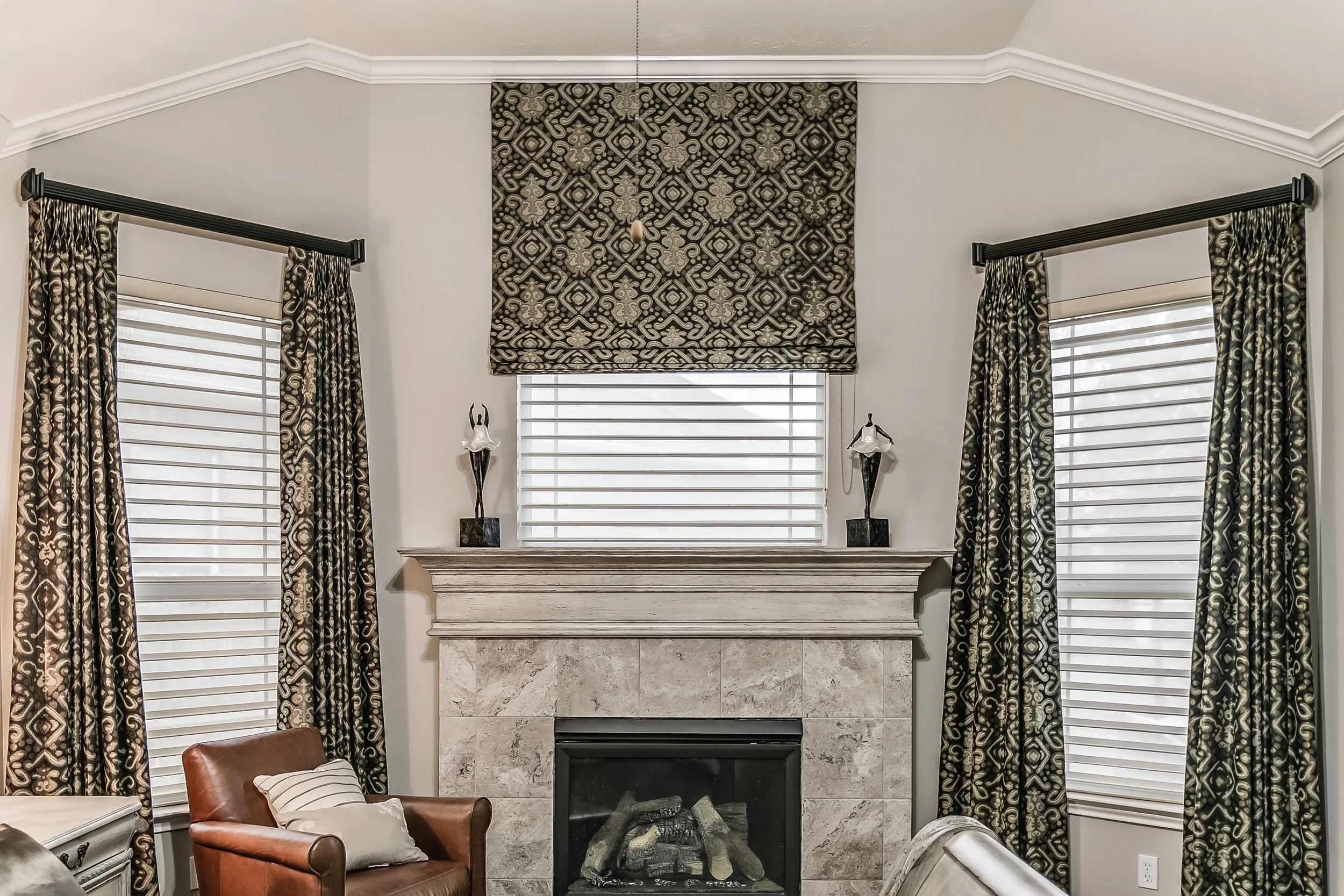
Hanging curtains sounds simple enough until you start making decisions about rod placement, panel length, hardware, and how far the curtains should extend beyond the window. Get those details right, and the finished treatment can make a room look more balanced while letting in more natural light. Get them wrong, and even beautiful fabric can look awkward once it's on the wall.
At Curtains By Design Interiors, professional installation is included in every custom drapery project. Here's what goes into getting the details right, what you can expect from the process, and when it makes sense to bring in a professional.
Why curtain installation matters as much as the fabric
Fabric gets much of the attention when homeowners choose curtains, but the way those curtains are installed has a major effect on the result.
Consider two otherwise identical rooms. In one, the curtain rod sits just above the window frame and the panels barely reach the floor. In the other, the rod is mounted higher, the panels extend to the floor, and the hardware allows them to sit clear of the glass when open. The fabric might be the same, but the rooms can look quite different.
Rod placement, panel length, fullness, and hardware all affect the finished appearance. They also influence how easily you can open the curtains, how much daylight enters the room, and how well the treatment provides privacy. They may even affect how well you can open and close your doors.
These decisions are best made before the hardware goes on the wall, not corrected after installation.
How high should curtains be hung?
In many rooms, hanging curtains close to the ceiling or crown molding, with panels that reach the floor, creates a taller, more balanced look. It's a common approach in formal living rooms, bedrooms, and other spaces where full-length drapery suits the architecture.
The exact height depends on the room. Ceiling height, crown molding, window proportions, and the placement of nearby furniture can all affect the best position.
There isn't one measurement that works for every Houston home. A newer home with tall ceilings may need a different approach from an older home with original trim or unusual window proportions. The goal is to choose a placement that works with the architecture rather than applying the same rule everywhere.
How far should curtains extend beyond the window?
The rod usually needs to extend beyond the window frame so the panels can move out of the way when they're open. That helps keep the glass clear and allows more natural light into the room.
For many windows, extending the rod roughly four to eight inches beyond each side of the frame is a useful starting point. Larger windows may need more room, while narrow windows or limited wall space can restrict how far the hardware extends.
The amount of space available for the panels to stack matters, too. Thick fabrics and fuller panels take up more room when open than lightweight sheers do.
That's why rod width, fabric choice, and panel fullness should be considered together. A measurement that works for one treatment may not work as well for another.
What happens during professional curtain installation?
At Curtains By Design Interiors, installation is the final stage of a process that includes design decisions, measurements, fabric selection, and fabrication. By installation day, the treatment has been planned for the specific windows and room.
The installation includes several important steps.
Mounting the hardware.
Brackets and rods are positioned according to the design and securely attached using appropriate mounting methods for the wall and available support. The correct approach depends on the actual wall construction and hardware being installed.
Hanging and dressing the panels.
Once the curtains are hung, the panels are arranged so the folds fall as intended. Newly fabricated drapery may need some shaping before it hangs the way it should.
Steaming the fabric.
Steaming helps relax creases from fabrication, packaging, and handling. The appropriate method depends on the fabric, since some materials require more care than others.
Checking the finished treatment.
Before leaving, we check the way the panels hang, how they move, and how the finished treatment looks in the room. If an adjustment is needed, it's best to address it at this stage.
These finishing steps help ensure the curtains are ready to use and look the way they were designed to look.
What to consider when installing curtains in a Houston home
Houston homes vary widely in age, architecture, and construction. Those differences can affect both the installation process and the design decisions that come before it.
Older homes in areas such as the Heights, Montrose, and River Oaks may have original trim, plaster walls, or other architectural details that need to be considered when positioning and mounting hardware. Newer homes in communities such as Katy, Sugar Land, Bridgeland, and Fulshear may have taller ceilings or larger windows that call for longer panels and wider hardware.
Sun exposure is another consideration. South- and west-facing windows can receive intense direct sunlight, so fabric and lining choices matter if you're concerned about fading or light control. The placement and coverage of the treatment also affect how much of the window can be covered when the curtains are closed.
These decisions work best when they're considered as part of the overall design, rather than left until the day of installation.
Should you hire a professional installer or handle it yourself?
For a straightforward window with lightweight curtains and standard hardware, installation may be a manageable DIY project if you're comfortable measuring, drilling, and mounting hardware securely.
Professional help becomes more valuable when you're working with tall ceilings, large or unusually shaped windows, heavy fabric, layered treatments, or multiple windows that need to look consistent throughout a room.
It's also worth considering who is making the design decisions. If you're investing in custom drapery, getting the rod height, panel length, fullness, and hardware placement right is part of protecting that investment.
At Curtains By Design Interiors, installation is included with custom drapery projects, so the design and installation decisions are handled as part of the same process.
Frequently Asked Questions
How much does curtain installation cost in Houston?
At Curtains By Design Interiors, professional installation is included in custom drapery projects. The overall cost depends on the fabric, number of windows, hardware, heading style, and other design choices. Every project begins with a $150 in-home consultation, and a detailed estimate is provided before fabrication begins.
How long does curtain installation take?
The installation itself may take a few hours, depending on the number of windows, the hardware, and the complexity of the project. The full custom drapery process typically takes four to six weeks from the initial consultation through final installation, although timing can vary.
Can you install curtains I already own?
Our usual process includes design, fabric selection, fabrication, and installation together. If you already own curtains and need help installing them, contact us to discuss your windows and what you're looking to accomplish. We'll let you know whether we can help with your particular project.
Does Curtains By Design Interiors serve the greater Houston area?
Yes. Curtains By Design Interiors serves homeowners throughout Houston, including River Oaks, Memorial, the Heights, Katy, Sugar Land, Cypress, Bridgeland, Fulshear, and surrounding communities.
What's the difference between professional installation and a full custom drapery service?
Professional installation focuses on mounting the hardware and hanging the curtains correctly. A full custom drapery service also includes decisions about fabric, measurements, panel dimensions, fullness, hardware, and placement before the installation takes place.
At Curtains By Design Interiors, those steps are part of one process, so the finished treatment is designed for the room rather than selected first and fitted afterward.
Thinking about new curtains for your home?
Every Curtains By Design Interiors project starts with a $150 in-home consultation. Swaha visits your home, looks at your windows and the surrounding space, and discusses what you'd like to achieve.
From fabric samples and design decisions to fabrication and professional installation, we help you plan the treatment and carry it through to the finished result.
At Curtains By Design Interiors, we serve homeowners throughout Fulshear, Katy, Richmond, Sugar Land, Memorial, River Oaks, and the greater Houston area. We help Houston-area homeowners create spaces that feel elegant, comfortable, and uniquely their own. From custom curtains and draperies to complete interior design and upholstery services, we guide you through every step — balancing high-end design with practical solutions.
Ready to transform your home? Schedule a consultation today.